


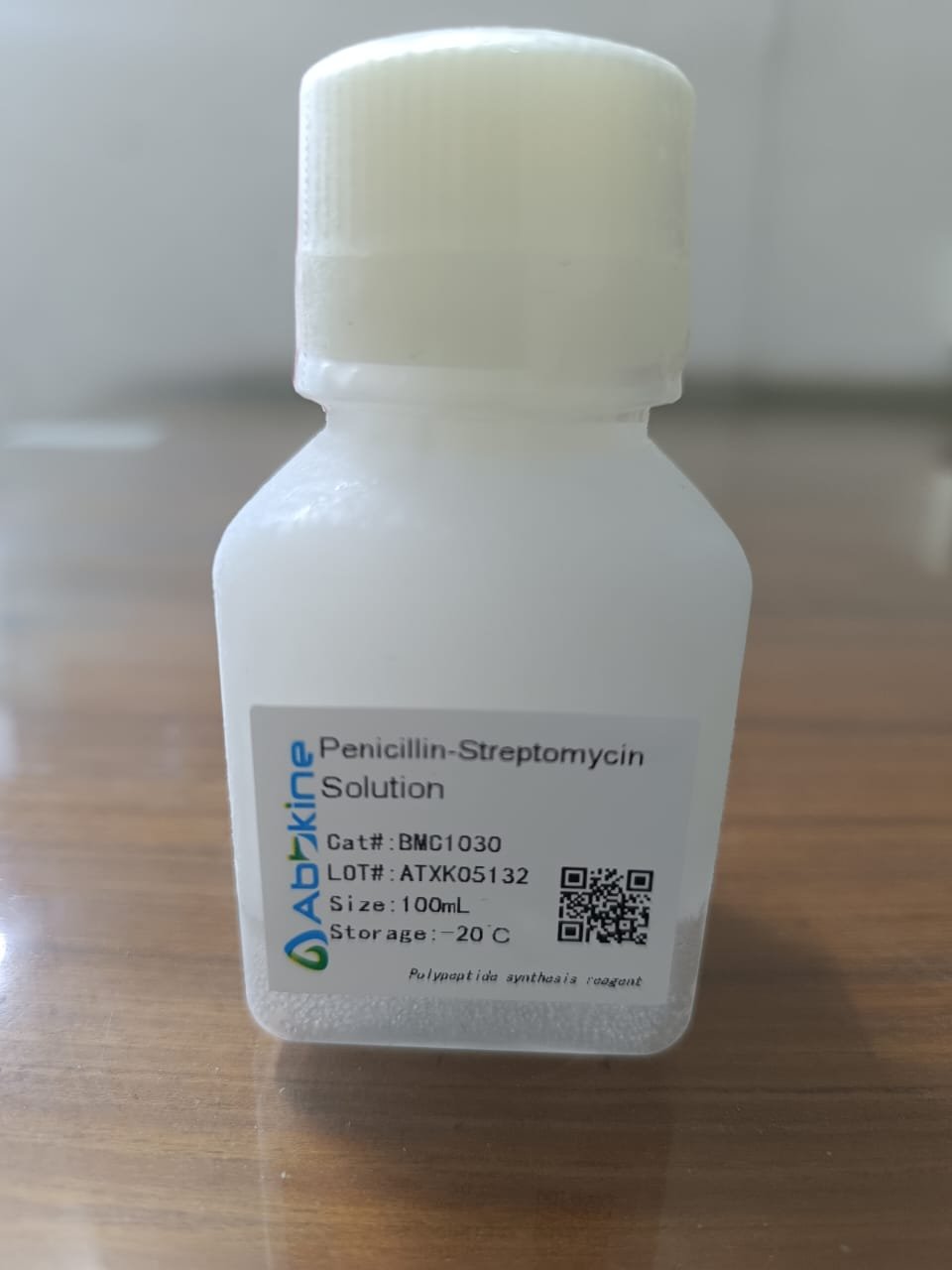
Penicillin-Streptomycin Solution

Penicillin-Streptomycin Solution

Penicillin Streptomycin Solution, also commonly referred to as “double antibody”, is the most commonly used antibiotic in vitro culture to prevent microbial contamination, and is often formulated to 100 times the concentration of mother liquor. Among them, penicillin can interfere with the synthesis of bacterial cell wall, and is especially effective against gram-positive bacteria. Streptomycin can bind to the 30S subunit of the bacterial ribosome, inhibit the synthesis of bacterial proteins, and is effective against both gram-negative and Gram-positive bacteria, but is particularly effective against Gram-negative bacteria.

SKU:

BMC1030

Product name

Penicillin-Streptomycin Solution

Applications

Cell culture

SampleType

Mammalian cells

Formulation

Liquid solution

Features & Benefits

• Ready-to-use, It was filtered with a 0.1 μm filter membrane and could be added directly to the cell culture medium.

Storage instructions

Stored at -20℃ for 12 months.

Shipping

Gel pack with blue ice.

Precautions

The product listed herein is for research use only and is not intended for use in human or clinical diagnosis. Suggested applications of our products are not recommendations to use our products in violation of any patent or as a license. We cannot be responsible for patent infringements or other violations that may occur with the use of this product.

Background

Penicillin Streptomycin Solution, also commonly referred to as “double antibody”, is the most commonly used antibiotic in vitro culture to prevent microbial contamination, and is often formulated to 100 times the concentration of mother liquor. Among them, penicillin can interfere with the synthesis of bacterial cell wall, and is especially effective against gram-positive bacteria. Streptomycin can bind to the 30S subunit of the bacterial ribosome, inhibit the synthesis of bacterial proteins, and is effective against both gram-negative and Gram-positive bacteria, but is particularly effective against Gram-negative bacteria.


Citations   3

Penicillin-Streptomycin Solution

Penicillin-Streptomycin Solution

Penicillin-Streptomycin Solution

BMC1030

Penicillin Streptomycin Solution, also commonly referred to as “double antibody”, is the most commonly used antibiotic in vitro culture to prevent microbial contamination, and is often formulated to 100 times the concentration of mother liquor. Among them, penicillin can interfere with the synthesis of bacterial cell wall, and is especially effective against gram-positive bacteria. Streptomycin can bind to the 30S subunit of the bacterial ribosome, inhibit the synthesis of bacterial proteins, and is effective against both gram-negative and Gram-positive bacteria, but is particularly effective against Gram-negative bacteria.

Cat no: BMC1030 BMC1030 Size: Rate Rate 100ml 19$ 19$ Datasheet Get Quote MS/DS COA

SKU:

BMC1030

Product name

Penicillin-Streptomycin Solution

Applications

Cell culture

SampleType

Mammalian cells

Formulation

Liquid solution

Features & Benefits

• Ready-to-use, It was filtered with a 0.1 μm filter membrane and could be added directly to the cell culture medium.

Storage instructions

Stored at -20℃ for 12 months.

Shipping

Gel pack with blue ice.

Precautions

The product listed herein is for research use only and is not intended for use in human or clinical diagnosis. Suggested applications of our products are not recommendations to use our products in violation of any patent or as a license. We cannot be responsible for patent infringements or other violations that may occur with the use of this product.

Background

Penicillin Streptomycin Solution, also commonly referred to as “double antibody”, is the most commonly used antibiotic in vitro culture to prevent microbial contamination, and is often formulated to 100 times the concentration of mother liquor. Among them, penicillin can interfere with the synthesis of bacterial cell wall, and is especially effective against gram-positive bacteria. Streptomycin can bind to the 30S subunit of the bacterial ribosome, inhibit the synthesis of bacterial proteins, and is effective against both gram-negative and Gram-positive bacteria, but is particularly effective against Gram-negative bacteria.


Citations   3

SKU:

BMC1030

Product name

Penicillin-Streptomycin Solution

Applications

Cell culture

SampleType

Mammalian cells

Formulation

Liquid solution

Features & Benefits

• Ready-to-use, It was filtered with a 0.1 μm filter membrane and could be added directly to the cell culture medium.

Storage instructions

Stored at -20℃ for 12 months.

Shipping

Gel pack with blue ice.

Precautions

The product listed herein is for research use only and is not intended for use in human or clinical diagnosis. Suggested applications of our products are not recommendations to use our products in violation of any patent or as a license. We cannot be responsible for patent infringements or other violations that may occur with the use of this product.

Background

Penicillin Streptomycin Solution, also commonly referred to as “double antibody”, is the most commonly used antibiotic in vitro culture to prevent microbial contamination, and is often formulated to 100 times the concentration of mother liquor. Among them, penicillin can interfere with the synthesis of bacterial cell wall, and is especially effective against gram-positive bacteria. Streptomycin can bind to the 30S subunit of the bacterial ribosome, inhibit the synthesis of bacterial proteins, and is effective against both gram-negative and Gram-positive bacteria, but is particularly effective against Gram-negative bacteria.


Citations   3

Principle of the Procedure

This assay employs the competitive inhibition enzyme immunoassay technique. The microtiter plate provided in this kit has been pre-coated with Pig CCK. Standards or samples are added to the appropriate microtiter plate wells then with a biotin-conjugated antibody specific to Pig CCK. Next, Avidin conjugated to Horseradish Peroxidase (HRP) is added to each microplate well and incubated. After TMB substrate solution is added. The enzyme-substrate reaction is terminated by the addition of sulphuric acid solution and the color change is measured spectrophotometrically at a wavelength of 450nm ± 10nm. The concentration of Pig CCK in the samples is then determined by comparing the OD of the samples to the standard curve.

Citations  Â